
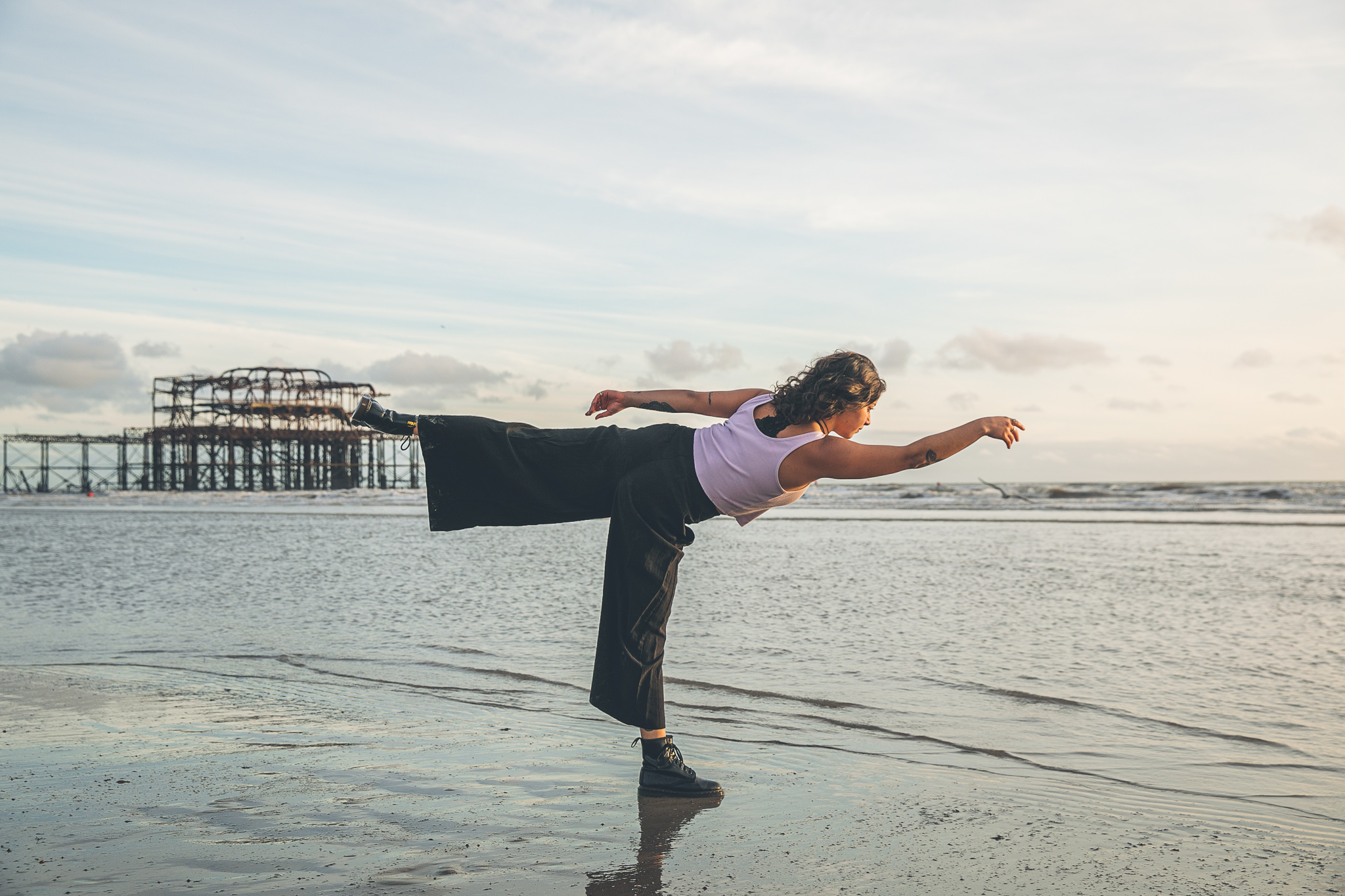
Before I delve into this rabbit hole, I want to get one thing straight: I have a lot of love for yoga asana (the physical practice) but I don't believe it is a complete movement practice.
Why not? Because there are movement gaps where asana lacks, for example: resistance and 'pull' based movements. The type of movement gap depends on the style of yoga being practiced, however I do believe that every avid yoga student, teacher and practitioner SHOULD do some form of other movement to at least compliment their asana practice. More importantly, to provide sustainable and various movement patterns as well as enhance the longevity of their physiology by making themselves more robust in order to help avoid or mitigate the chance of injury.
I'm sharing all of this because I speak from experienced and don't want you to have to make the same mistakes I did! I'm not trying to scare you, I'm just sharing my honest experience.
For too long (6 years) my only movement practice was asana. As someone who is hypermobile and naturally flexible, this practice wasn't helping me to: 1) stabilise my over mobile joints, 2) strengthen my muscles so that my supporting structures (ligaments and tendons) wouldn't just be excessively lack (which is a BIG red flag), 3) nor offer the variation to train the different types of muscles fibres (slow and fast twitch). As a bonus, I also developed strains in parts of my body as a result of excessive and repetitive movement patterns *cough chaturangas cough*
Here is lovely bit of imagery for you: my body's structures (muscles, ligaments, tendons and joints) were like a rubber band that kept getting stretched and stretched to its limit. It got to the point where it started developing some frays and got pretty rubbish at holding anything together. Until it finally snapped (more on that below).
That is why, for the past year, I have consistently dedicated time in the week for strength and conditioning training in order to fill in these movement gaps to further support my asana practice and teaching. During this time I have... 1) helped stabilise my very mobile shoulders and prevented any relapse to a previous shoulder impingement injury 2) developed greater muscular awareness, through movement variety and exposure, which has enabled me to stop rely on only my ligaments and tendons to support me 3) assisted my muscle fibres to 'change' towards fast twitch again, meaning my muscle activation is quicker 4) rehabbed and once again strengthened my weakened wrists as a result of excessive and repetitive loading
However, as peachy as this was all going, I ended up injuring (*snapping*) myself in May 2021. They always say that too much of one thing is never good - in this case, asana - and the injury I sustained is actually one of the most common in the yoga world: Sacroilliac (SI) joint dysfunction.
It reared its ugly head because my body had basically had enough after 6 years of only doing asana and 2 years of teaching an average of 15+ classes a week, with no other movement. So since then, my strength and conditioning practice has been my life line. It has helped me come back from pain so bad that I couldn't walk, sit, lie down without excruciating discomfort. It has helped me further support my body's internal structures and made me more robust. It has educated me about this all too common injury in the yoga world, and has finally brought me here where I'm sharing this information with you!
So what can you take away from this and into your movement practice?... - Introduce different movement modalities to provide different stimulus, variation and awareness over your body - Try to balance out your asana practice with something else to help fill in those movement gaps - strength training, swimming, climbing, cycling, mobility drills with added resistance etc (you don't just have to go to the gym but I would 10/10 recommend lobbing a barbell around) - Start to think not just about the 'shape' you are creating in your asana practice, but whether your joints feel stable and your muscles are firing / activating in order to support you
I hope this provides some perspective as to why I pepper my teachings with mobility and strength drills and always harp on about the importance of varied movement - because I want you all to reap the sustainable physiological benefits when done with awareness and care! I'm also creating judgements that are biased by my own personal experiences, so by all means, take this article with a pinch of salt.
I hope this juicy chunk of writing helps your own personal practice, and provides a some insight and perspective into it. As always, if you have any questions, just drop me an email!